
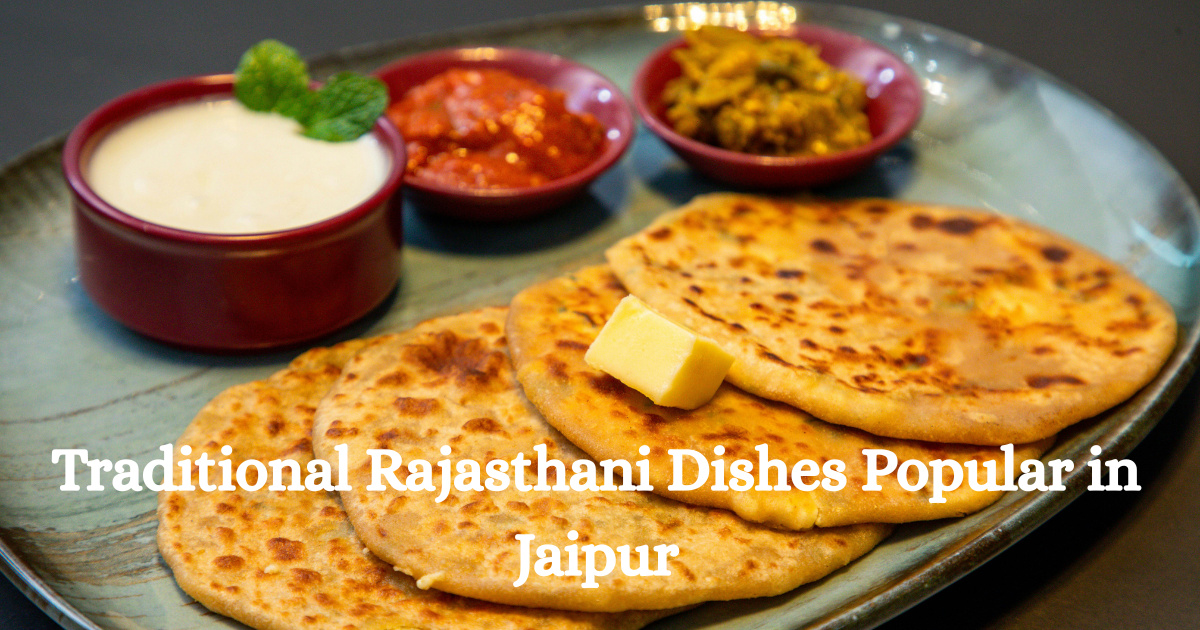
Jaipur is not just the capital of Rajasthan — it is also the culinary capital of one of India’s most distinctive and celebrated regional food cultures. Rajasthani cuisine is a direct product of the land it comes from: a vast, sun-scorched desert state where water was scarce, fresh vegetables were rare, and survival required creativity, resourcefulness, and a genius for making extraordinary food from the most basic of ingredients.
The result is a cuisine unlike anything else in India — deeply spiced, generously enriched with ghee, built around dried and preserved ingredients, and yet somehow producing some of the most flavourful, satisfying, and memorable dishes you will ever eat. When you visit Jaipur, eating traditional Rajasthani food is not just a meal — it is a living connection to centuries of royal history, desert wisdom, and cultural heritage.
This guide takes you through the most famous and beloved traditional Rajasthani dishes you will find in Jaipur, the history and story behind each one, where to eat them, and what makes each dish so special and worth trying.
Table of Contents
- The Story Behind Rajasthani Cuisine
- Dal Baati Churma
- Laal Maas
- Safed Maas
- Gatte ki Sabzi
- Ker Sangri
- Bajre ki Roti with Lehsun Chutney
- Panchratna Dal
- Papad ki Sabzi
- Ghewar
- Malpua with Rabri
- Moong Dal Halwa
- The Rajasthani Thali Experience
- Best Restaurants for Traditional Rajasthani Food in Jaipur
The Story Behind Rajasthani Cuisine
To truly appreciate Rajasthani food, you need to understand the landscape and history that created it. Rajasthan is India’s largest state and a significant portion of it is covered by the Thar Desert — one of the hottest and most arid regions on the planet. For centuries, the people of Rajasthan had to find ways to cook and eat in conditions where water was a precious commodity, fresh vegetables were difficult to grow, and food needed to be preserved for long periods during military campaigns or difficult seasons.
This gave rise to a cooking tradition built on dried legumes, preserved vegetables, millet and wheat grains, dairy products like ghee and yoghurt, and a bold, powerful blend of spices that not only added flavour but also served practical purposes — spices like red chilli and cumin have preservative and digestive properties that were especially valuable in a hot desert climate.
The royal Rajput courts also had a significant influence on the cuisine. The Rajput warriors and kings were meat eaters and hunters, and their culinary tradition produced bold, deeply spiced meat preparations like Laal Maas and Safed Maas that became signature dishes of the region. The Brahmin and Jain communities of Rajasthan, on the other hand, developed an extraordinarily rich vegetarian tradition that uses no onion or garlic in many preparations and yet produces dishes of remarkable depth and complexity. Both traditions are very much alive in Jaipur today and together they give the city one of the most complete and varied regional cuisines in all of India.
Dal Baati Churma — The Complete Rajasthani Meal
Dal Baati Churma is the undisputed king of Rajasthani cuisine and the dish that every visitor to Jaipur must eat at least once. It is not simply a single dish — it is three distinct preparations served together that create a meal of extraordinary balance, combining savoury, spicy, and sweet elements in a way that is deeply satisfying and completely unique to Rajasthan.
The Baati is the centrepiece — a hard, round bread made from whole wheat flour, shaped into smooth balls, and traditionally baked in a wood or coal fire until the exterior becomes golden and slightly charred. The inside remains dense and slightly chewy. Before serving, the baati is cracked open and drowned in pure desi ghee, which immediately softens it and infuses it with an extraordinary richness. The smell of a freshly ghee-soaked baati is one of the most comforting aromas in all of Indian cooking.
The Dal served alongside is typically a Panchratna preparation — a combination of five different lentils including toor, urad, moong, chana, and moth dal — slow-cooked together with tomatoes, garlic, dried chillies, and a powerful tadka of ghee, cumin, and asafoetida. The result is a thick, deeply flavoured curry that complements the richness of the ghee-soaked baati perfectly.
The Churma is the sweet component of the trio — made by coarsely crushing roasted wheat dough, mixing it generously with ghee and either jaggery or sugar, and often flavoured with cardamom and garnished with dry fruits. The churma acts as both a dessert and a palate cleanser, its sweetness beautifully contrasting with the savoury, spiced dal and the rich, buttery baati.
The origins of this dish lie in the battlefields of Rajputana, where warriors would bake baati in the sand under their campfires during military campaigns — a cooking method that required no water and produced food that was calorie-dense and long-lasting. Today it is the ceremonial centrepiece of every important Rajasthani occasion from weddings to festivals. A generous plate at a local restaurant costs between ₹150 and ₹300.
Laal Maas — The Fiery Red Meat Curry
Laal Maas — literally meaning “red meat” in Rajasthani — is one of the most celebrated and distinctive meat preparations in all of Indian cuisine. This intensely flavoured mutton curry gets its extraordinary colour and heat from Mathania chillies, a specific variety of dried red chilli cultivated near Jodhpur that has a deep, complex flavour with significant but not overwhelming heat. The combination of these chillies with yoghurt, garlic, and generous quantities of desi ghee creates a curry of remarkable depth and character.
Historically, Laal Maas was a dish of the Rajput hunting parties and royal courts. After a day of hunting in the forests and grasslands around Rajputana, the kill would be cooked over an open fire in thick iron deghs (vessels) with whatever spices and dairy were available. The resulting dish was bold, restorative, and deeply aromatic — perfectly suited to the needs of warriors who had spent the day outdoors. The use of yoghurt and ghee as the base rather than water also meant the dish preserved well and could be reheated over multiple meals.
Traditional Laal Maas is made by slow-cooking bone-in mutton pieces in a paste of Mathania chillies, garlic, and yoghurt over a very low flame for a long period — often two hours or more — until the meat is completely tender and the gravy has reduced to a thick, glossy, deeply red sauce. It is served with Bajre ki Roti (millet flatbread), tandoori roti, or simple steamed rice.
The best places to eat Laal Maas in Jaipur include Handi Restaurant on MI Road — one of the oldest and most beloved non-vegetarian restaurants in the city — and Spice Court in Civil Lines, which is known for its particularly authentic version of this dish. A plate of Laal Maas at a good restaurant costs between ₹300 and ₹600.
Safed Maas — The Royal White Meat Curry
If Laal Maas represents the fiery, warrior side of Rajasthani royal cooking, then Safed Maas — “white meat” — represents its refined, courtly elegance. This is a lamb or mutton curry of extraordinary delicacy, made without any red chillies or turmeric. Instead, the meat is slow-cooked in a creamy white sauce made from yoghurt, fresh cream, cashew paste, and a carefully balanced blend of mild spices including white pepper, cardamom, cloves, and mace. The result is a curry that is rich, velvety, subtly aromatic, and deeply satisfying without any of the heat associated with other Rajasthani meat preparations.
Safed Maas was originally prepared in the royal kitchens of Rajasthan for the Maharajas and their distinguished guests. The use of cream, cashews, and saffron — all expensive and precious ingredients — marked it as a dish of luxury and prestige. It is sometimes flavoured with a hint of saffron and garnished with fried dry fruits, giving it a beautiful appearance that matches its exquisite flavour. It is best eaten with thin, soft rotis or fragrant saffron rice. While less commonly available than Laal Maas, Safed Maas can be found at heritage restaurants and upscale Rajasthani dining establishments in Jaipur.
Gatte ki Sabzi — Desert Ingenuity in a Bowl
Gatte ki Sabzi is one of the most brilliant examples of Rajasthani culinary ingenuity. In a land where fresh vegetables were historically difficult to grow and obtain, the cooks of Rajasthan found a way to create a rich, deeply satisfying curry using nothing more than gram flour (besan), yoghurt, and spices — ingredients that were always available even in the most remote desert villages.
Gatte are firm, cylindrical dumplings made by mixing besan with spices including carom seeds (ajwain), red chilli, coriander powder, and a little oil, then kneading the mixture into a stiff dough. The dough is rolled into long cylinders, boiled in water until firm, and then sliced into smaller rounds. These rounds — the gatte — are then cooked in a tangy, golden-yellow yoghurt-based curry spiced with cumin, mustard seeds, turmeric, and asafoetida. The gatte have a pleasantly firm, slightly chewy texture that contrasts beautifully with the creamy, spiced curry around them.
Gatte ki Sabzi is eaten across Rajasthan as both an everyday home meal and a festive preparation. In Jaipur, it is a standard component of the traditional Rajasthani thali and is also served as a standalone curry with bajra roti or chapati at local dhabas and restaurants throughout the city. The price at a local restaurant is generally between ₹80 and ₹150 per portion.
Ker Sangri — The Desert’s Own Vegetable
Ker Sangri is perhaps the most uniquely Rajasthani dish on this list because it is made from ingredients that exist nowhere else in Indian cooking. Ker is a small, tangy wild berry that grows on thorny shrubs found throughout the Thar Desert, and Sangri is the long, dried bean of the Khejri tree — the state tree of Rajasthan, considered sacred by the Bishnoi community and deeply woven into the ecological and cultural life of the desert.
Both ker and sangri are dried and preserved, making them ideal ingredients for a desert cuisine. Before cooking, they are soaked overnight in water to rehydrate them. They are then cooked together with dried red chillies, carom seeds, mustard oil, and spices into a dry, intensely flavoured preparation that is tangy, slightly bitter, earthy, and deeply aromatic all at once. The flavour is unlike anything else in Indian cuisine and takes a little getting used to, but it is genuinely extraordinary and completely irreplaceable once you develop a taste for it.
Ker Sangri is considered one of Rajasthan’s most prestigious traditional preparations and is a centrepiece of Marwari wedding feasts. It is recognized as one of Rajasthan’s most authentic gourmet preparations. In Jaipur, it is typically served as part of a full Rajasthani thali at heritage restaurants and cultural dining venues like Chokhi Dhani.
Bajre ki Roti with Lehsun Chutney — The Bread of the Desert
Wheat may be the dominant grain in most of North India, but in Rajasthan, bajra — pearl millet — holds an equally important place at the dining table. Bajra thrives in the arid, sandy soil of the Thar Desert where wheat cultivation is difficult, and for centuries it has been the primary grain of rural Rajasthan. Bajre ki Roti is a thick, slightly coarse flatbread made from bajra flour, cooked on a tawa and then finished directly on an open flame until it develops characteristic dark spots and a wonderful smoky flavour.
What makes Bajre ki Roti truly special is the combination it is traditionally served with: a fiery, pungent Lehsun ki Chutney — a paste made from dry red chillies, garlic, and spices that is ground on a stone mortar and has a raw, intense flavour unlike any cooked chutney. The combination of the dense, earthy bajra bread with the fiery garlic chutney is one of the great simple pleasures of Rajasthani food. It is often accompanied by a small bowl of fresh white butter or a glass of cold chaas (buttermilk) to balance the heat of the chutney.
Bajre ki Roti is the traditional accompaniment to Laal Maas and Ker Sangri and is a standard part of any authentic Rajasthani thali. In the winter months especially, when bajra is freshly harvested, you will find this bread being made and eaten in homes and dhabas across Jaipur with tremendous enthusiasm.
Panchratna Dal — Five Lentils, One Great Dal
Dal — cooked lentils — is a staple of Indian cooking across the country, but Rajasthan has its own distinctive tradition of dal preparation that produces some of the richest and most complex lentil dishes in the subcontinent. The most famous of these is Panchratna Dal, whose name translates to “five jewels” — a reference to the five different lentils that are combined to make it.
Panchratna Dal is a special lentil preparation which involves a combination of five different kinds of lentils — toor dal, urad dal, moong dal, chana dal, and moth dal. Each lentil has its own flavour, texture, and cooking time, and combining them produces a dal of extraordinary depth and body. The cooked lentils are tempered with a powerful tadka of ghee, cumin seeds, dried red chillies, garlic, and asafoetida, which is poured over the dal with a satisfying sizzle just before serving.
Panchratna Dal is the dal most commonly served with Dal Baati Churma and is a standard component of the Rajasthani thali. It is generously drizzled with additional ghee before being brought to the table. When eaten with ghee-soaked baati, it forms a combination that is filling, nourishing, and deeply comforting.
Papad ki Sabzi — When Papad Becomes a Curry
Papad ki Sabzi is another example of Rajasthani cooking’s genius for creating interesting dishes from preserved, shelf-stable ingredients. Papad — thin, crisp wafers made from lentil or chickpea flour — is ubiquitous across India as a side snack or accompaniment, but in Rajasthan it is taken a step further and turned into a full curry.
For Papad ki Sabzi, small pieces of raw or lightly roasted papad are cooked directly in a spiced yoghurt gravy similar to the one used for Gatte ki Sabzi. As the papad pieces absorb the yoghurt curry, they soften slightly while retaining a pleasant texture — neither completely soft nor fully crisp. The curry itself is flavoured with cumin, mustard seeds, dried red chillies, coriander powder, and a generous addition of ghee. The result is a simple but deeply satisfying dish that showcases the Rajasthani talent for transforming the most basic pantry ingredients into something genuinely delicious.
Ghewar — The Crown Jewel of Rajasthani Sweets
No exploration of traditional Rajasthani food is complete without talking about sweets, and no Rajasthani sweet is more iconic or more deeply associated with Jaipur than the Ghewar. Ghewar is a very popular Rajasthani sweet whose roots can be traced back to Jaipur. It is traditionally associated with the Teej and Raksha Bandhan festivals. This disc-shaped confection with its distinctive honeycomb texture is made by pouring a thin batter of flour, ghee, and water into very hot ghee in a special deep cylindrical vessel. The batter forms hundreds of tiny bubbles as it hits the hot fat, creating the lacy, latticed structure that defines this sweet.
Once fried to a perfect golden crispness, the ghewar is soaked in saffron-scented sugar syrup and traditionally topped with a generous layer of thick rabri — sweetened condensed milk — and garnished with silver leaf, slivered pistachios, and almonds. The result is a sweet that is crispy, syrupy, creamy, and aromatic all at once. Ghewar exists in different versions such as plain, mawa, and malai, each progressively richer than the last. The best Ghewar in Jaipur can be found at Laxmi Mishthan Bhandar (LMB) in Johari Bazaar and at Bikanervala outlets across the city.
Malpua with Rabri — Festival Sweetness
Malpua is a traditional Rajasthani dessert that occupies a very special place in the festive food culture of Jaipur. These are small, round, slightly crispy-edged pancakes made from a batter of refined flour, mashed banana or khoya, sugar, and aromatic spices including cardamom and fennel seeds. The batter is deep-fried in ghee until golden and slightly caramelized around the edges, then dipped briefly in warm sugar syrup.
Malpua is almost always served with Rabri — a thick, reduced, sweetened milk preparation flavoured with saffron and cardamom — poured generously over the warm, syrupy pancakes. The combination of the hot, slightly crispy malpua with the cold, creamy rabri is one of the great dessert pairings in Indian food. Malpua is traditionally made during festivals like Holi, Teej, and Diwali and at weddings, but in Jaipur you can find it year-round at sweet shops and traditional restaurants. Pushkar, a town near Jaipur, is particularly famous for its Malpua and many visitors make a day trip specifically to eat it.
Moong Dal Halwa — The Winter Treasure
Moong Dal Halwa is one of the richest, most indulgent traditional sweets of Rajasthan and is considered a winter delicacy of the highest order. It is made by soaking yellow moong dal (split yellow lentils), grinding them into a coarse paste, and then slow-cooking that paste in generous quantities of pure ghee over a very low flame, stirring continuously, for a long period — often over an hour. As the moong dal cooks in the ghee, it gradually changes colour from pale yellow to a beautiful, deep golden brown, developing a rich, nutty aroma that is almost intoxicating.
Once the dal has reached the right colour and texture, sugar, milk, cardamom, and saffron are added and the mixture is cooked further until it comes together into a dense, glossy halwa. It is then garnished with cashews, almonds, and pistachios that have been fried in ghee. The result is a sweet of extraordinary richness and flavour — intensely nutty, deeply aromatic, and satisfying in a way that few desserts can match.
Moong Dal Halwa is traditionally served at Rajasthani weddings in winter and is considered a prestigious preparation because of the time, skill, and quantity of ghee required to make it properly. In Jaipur, you will find it at traditional sweet shops during the winter months and as part of the dessert selection at heritage dining venues.
The Rajasthani Thali — Everything on One Plate
For a visitor to Jaipur who wants to experience the full breadth of traditional Rajasthani cuisine in a single meal, the Rajasthani Thali is the answer. A traditional thali is not just a meal — it is a carefully curated presentation of an entire culinary tradition, with multiple dishes arranged on a large steel or brass plate in a specific order that ensures a complete and balanced eating experience.
A full Rajasthani thali typically includes Dal Baati Churma as the centrepiece, along with Gatte ki Sabzi, Ker Sangri, Panchratna Dal, Bajre ki Roti or tandoori roti, steamed rice, papad, a selection of chutneys including lehsun ki chutney and mint chutney, boondi raita (yoghurt with fried gram flour balls), a seasonal sabzi, and two or three sweets such as Ghewar, Churma Ladoo, or Moong Dal Halwa. For first-time visitors, a thali is the best way to explore authentic Rajasthani food in Jaipur.
One of the special traditions of thali dining in Rajasthan is that the portions are typically unlimited — servers come around continuously to refill your plate with more dal, more sabzi, more roti, until you genuinely cannot eat another bite. The spirit of generous, abundant hospitality — called atithi devo bhava — is deeply embedded in Rajasthani culture and nowhere is it more visible than at a traditional thali meal.
Best Restaurants for Traditional Rajasthani Food in Jaipur
Jaipur has an excellent selection of restaurants and cultural dining venues where you can enjoy authentic traditional Rajasthani food in a setting that matches the grandeur of the cuisine.
Laxmi Mishthan Bhandar (LMB) — Johari Bazaar
LMB is one of the oldest and most celebrated vegetarian restaurants and sweet shops in Jaipur and has been a landmark of the old city since 1954. It is the go-to destination for authentic Dal Baati Churma, traditional Rajasthani thali, and world-class sweets including Ghewar, Mawa Kachori, and Rabri. The setting is simple and unpretentious but the food is consistently excellent. Prices are very reasonable making it accessible for all budgets.
Handi Restaurant — MI Road
Handi is the most respected non-vegetarian restaurant in Jaipur and the definitive destination for Laal Maas in the city. The restaurant has been operating for decades and its Laal Maas recipe is considered among the most authentic in Rajasthan. It is a must-visit for meat lovers and anyone who wants to experience the royal, warrior side of Rajasthani cuisine.
Spice Court — Civil Lines
Spice Court is a popular mid-range restaurant in Civil Lines that specializes in Rajasthani cuisine and is particularly well-regarded for its Laal Maas, Safed Maas, and authentic thali meals. The setting is pleasant and the food consistently receives high marks from both local diners and tourists. It is a good option for travelers who want a comfortable, reliable dining experience.
Chokhi Dhani — Tonk Road
Chokhi Dhani is a traditional Rajasthani cultural village resort on the outskirts of Jaipur that offers what is arguably the most immersive and complete Rajasthani dining experience in the city. The food — a generous thali featuring Dal Baati Churma, Ker Sangri, Gatte ki Sabzi, and multiple sweets — is served in a village setting with folk music, dance performances, camel rides, and traditional craft demonstrations happening around you. The entry fee includes the meal and all cultural activities. It is particularly recommended for families and first-time visitors who want to experience Rajasthani culture and cuisine together in one memorable evening.
Virasat Heritage Restaurant — Old City Area
Virasat is a heritage restaurant in Jaipur that focuses specifically on authentic traditional Rajasthani cuisine with an emphasis on preserving original recipes and cooking techniques. The thali here is considered one of the most authentic in the city and the setting in a restored heritage property adds to the atmosphere. It is a quieter, more intimate option compared to the larger cultural venues and is particularly appreciated by food enthusiasts who want to focus on the cuisine itself.
Final Thoughts
Traditional Rajasthani cuisine is one of the great regional food cultures of India and Jaipur is the best place in the world to experience it. Every dish on this list tells a story — of desert survival, royal grandeur, religious tradition, and the remarkable human ability to find richness and pleasure in even the most challenging of circumstances.
Whether you sit down to a full thali at LMB, eat Laal Maas at Handi with bajra roti, discover the extraordinary flavour of Ker Sangri for the first time, or end your evening with a ghee-soaked baati and sweet churma at a roadside dhaba, every bite of traditional Rajasthani food in Jaipur will leave you with a deeper appreciation for this magnificent cuisine and the culture that created it.
Eat slowly, eat generously, and eat with curiosity — that is the Rajasthani way.