
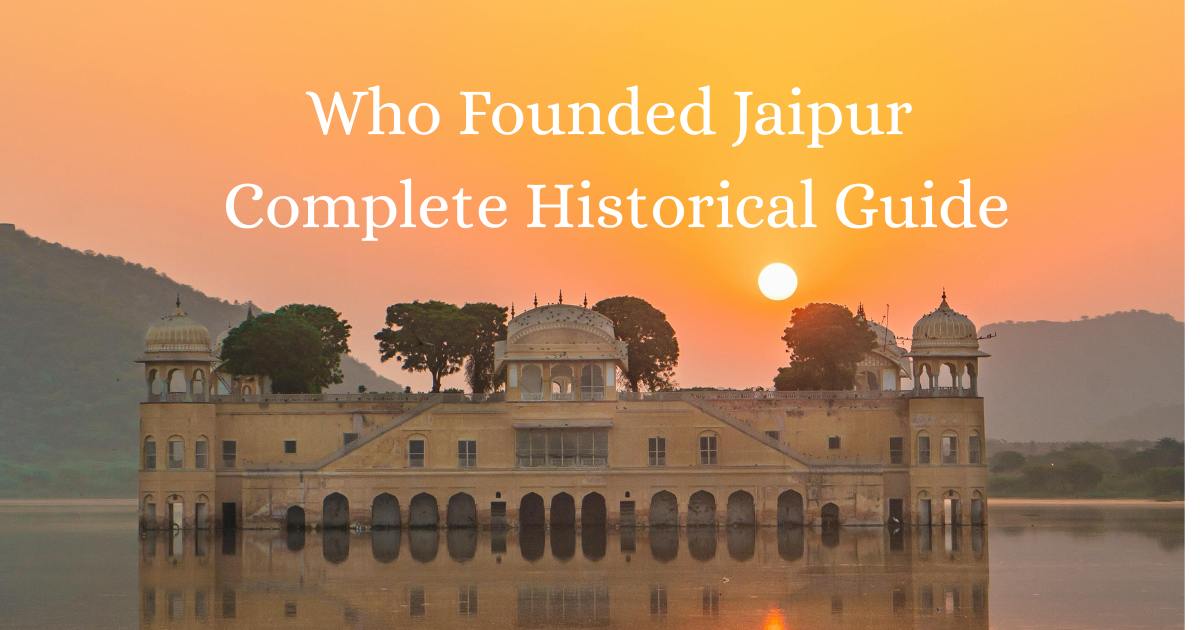
Jaipur, the capital city of Rajasthan, is one of India’s most famous historical cities. Known worldwide as the Pink City, Jaipur is admired for its grand palaces, historic forts, colorful markets, and carefully planned architecture. Every year, millions of tourists visit this beautiful city to explore its royal heritage and cultural richness.
One of the most common questions asked by history lovers and travelers is who founded Jaipur and why the city was built. The story behind Jaipur’s foundation is fascinating and reflects the vision of a brilliant ruler who wanted to create a well-organized and prosperous city.
Jaipur was founded in the early 18th century by the great Rajput ruler Maharaja Sawai Jai Singh II. His intelligence, leadership, and interest in science and architecture played a crucial role in shaping the city into one of the most remarkable urban centers in India.
This article provides a complete historical guide about the founder of Jaipur, the reasons behind its construction, and the planning that made the city unique.
The Founder of Jaipur
The founder of Jaipur was Maharaja Sawai Jai Singh II, a powerful and visionary ruler of the Kachwaha Rajput dynasty. He was born in 1688 and became the ruler of the kingdom of Amber at a young age.
Sawai Jai Singh II was not only a brave warrior but also a scholar with deep interests in astronomy, mathematics, and architecture. Because of his intellectual abilities and leadership skills, he gained respect not only among Rajput rulers but also in the Mughal court.
During his reign, he expanded his kingdom, strengthened trade, and developed better administrative systems. However, one of his most remarkable achievements was the creation of the city of Jaipur, which became a symbol of scientific planning and architectural excellence.
The Capital Before Jaipur
Before Jaipur was built, the capital of the kingdom was located in the historic town of Amer (also known as Amber). Amer had been the political center of the Kachwaha rulers for many years.
Although Amer was a strong and beautiful hill city, it faced several problems as the population grew. The narrow streets and mountainous terrain limited expansion, and water supply also became a major issue for the growing population.
Recognizing these challenges, Maharaja Sawai Jai Singh II realized that a new capital city was necessary for the future development of his kingdom.
Why Jaipur Was Built
The decision to build Jaipur was based on several important reasons:
1. Population Growth
The population of Amer had increased significantly, making it difficult to accommodate more residents within the limited space of the hill town.
2. Water Shortage
Water supply in Amer was limited, which created difficulties for both residents and administration.
3. Need for a Planned City
Sawai Jai Singh II wanted to create a city that would be well-planned, spacious, and suitable for trade and governance.
4. Trade and Economic Development
Jaipur was located along important trade routes connecting northern India with western regions. Building a new city in a strategic location would boost commerce and economic growth.
For these reasons, the ruler decided to establish a new capital city near Amer.
Planning and Construction of Jaipur
The construction of Jaipur began in 1727. Unlike many cities that developed gradually, Jaipur was designed with a clear and scientific plan before construction started.
To help design the city, Maharaja Sawai Jai Singh II appointed the talented architect and scholar Vidyadhar Bhattacharya. He used ancient Indian architectural principles such as Vastu Shastra and Shilpa Shastra to design the layout of the city.
Jaipur was divided into nine rectangular sections, known as “chaukris.” These sections represented the nine divisions of the universe according to Hindu cosmology.
The city featured:
- Wide and straight roads
- Organized markets
- Residential areas
- Administrative buildings
- Royal palaces and temples
This systematic layout made Jaipur one of the first planned cities in India.
Architectural Features of Jaipur
Jaipur’s architecture reflects a beautiful blend of Rajput and Mughal styles. The city contains many impressive monuments that showcase the artistic talent of its builders.
Some of the most famous landmarks include:
- Hawa Mahal
- City Palace
- Jantar Mantar
- Amber Fort
These structures are admired for their detailed carvings, decorative balconies, beautiful courtyards, and grand entrances.
Jaipur’s markets were also carefully designed to support trade and business activities.
Jai Singh II and Astronomy
One of the most interesting aspects of Maharaja Sawai Jai Singh II’s personality was his passion for astronomy.
He built several astronomical observatories across India, the most famous being the one located in Jaipur called Jantar Mantar.
This observatory contains large instruments used to measure time, track celestial bodies, and study the movement of stars and planets. It is now recognized as a UNESCO World Heritage Site.
The construction of such observatories shows that Jai Singh II was deeply interested in scientific knowledge and research.
Why Jaipur Is Called the Pink City
Although Jaipur was founded in 1727, the city became famous as the Pink City much later.
In 1876, during the reign of Maharaja Sawai Ram Singh II, the city was painted pink to welcome the Prince of Wales, who later became King Edward VII.
Pink was chosen because it symbolized hospitality and warmth. The buildings of the old city were painted in a terracotta pink shade, creating a stunning and uniform appearance.
The tradition continued, and even today many buildings in the historic area maintain the same pink color.
Jaipur’s Global Recognition
Because of its historical importance, architectural beauty, and unique planning, Jaipur has received international recognition.
In 2019, the historic walled city of Jaipur was declared a World Heritage Site by UNESCO.
This recognition highlights the city’s outstanding cultural and historical value.
Interesting Facts About the Founder of Jaipur
Here are some interesting facts about Maharaja Sawai Jai Singh II:
- He became ruler of Amber at the age of 11.
- He founded Jaipur in 1727.
- He was deeply interested in astronomy and mathematics.
- He built five astronomical observatories in India.
- His vision helped create one of the most well-planned cities in Asia.
These achievements show that Jai Singh II was not only a powerful ruler but also a great thinker and planner.
Conclusion
Jaipur stands today as a shining example of visionary leadership and intelligent city planning. Founded in 1727 by Maharaja Sawai Jai Singh II, the city was designed to overcome the limitations of the old capital Amer and to support future growth.
With its organized streets, magnificent palaces, scientific observatories, and vibrant culture, Jaipur quickly became one of the most important cities in India.
The legacy of its founder continues to influence the city even today. From its historic monuments to its unique identity as the Pink City, Jaipur remains a symbol of Rajasthan’s royal heritage and architectural brilliance.
Understanding the history behind the foundation of Jaipur helps us appreciate the remarkable vision of Maharaja Sawai Jai Singh II, whose dream city continues to attract travelers, historians, and culture enthusiasts from around the world.v