
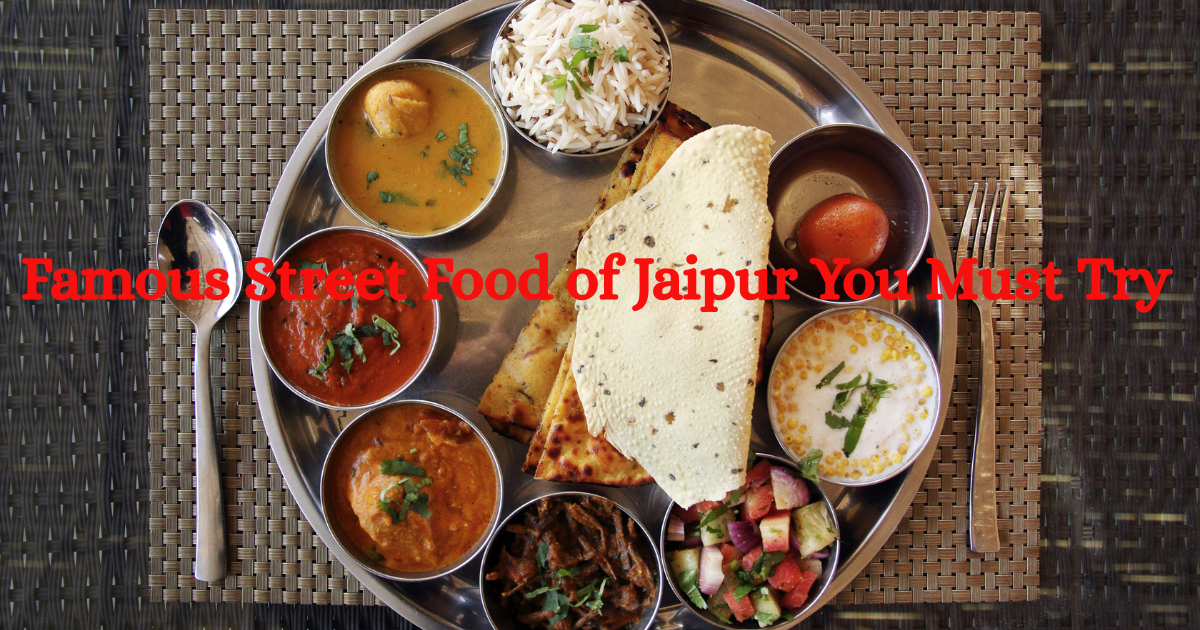
Jaipur is not just a city of forts, palaces, and colourful bazaars. It is also one of the greatest street food destinations in all of India. The moment you step into the lanes of the old walled city, your senses are immediately hit by the aroma of deep-frying kachoris, sizzling jalebis, simmering dal, and freshly brewed masala chai. Street food in Jaipur is not just about eating — it is about experiencing the living culture and culinary heritage of Rajasthan in its most honest and delicious form.
From spicy fried snacks sold at tiny roadside stalls to creamy desserts served in traditional clay pots, the variety and depth of Jaipur’s street food scene is nothing short of extraordinary. Whether you are a first-time visitor or returning to the Pink City for the fifth time, there is always something new to taste and discover. This guide covers the most famous street foods of Jaipur that you absolutely must try, where to find the best versions of each dish, how much they cost, and the best times to eat them.
Table of Contents
- Pyaaz Kachori — The Soul of Jaipur Street Food
- Dal Baati Churma — The Iconic Rajasthani Meal
- Mirchi Vada — For the Brave and Spice-Loving
- Laal Maas — The Fire of Rajasthan
- Ghewar — Jaipur’s Most Famous Sweet
- Mawa Kachori — The Sweet Surprise
- Jaipur Lassi — Thick, Creamy, and Unforgettable
- Jalebi and Rabri — The Classic Combination
- Gatte ki Sabzi — A Rajasthani Staple
- Kulfi Faluda — The Royal Dessert
- Jaipur Chaat — Evening Street Snacking Done Right
- Best Places for Street Food in Jaipur
- Street Food Safety Tips for Visitors
Pyaaz Kachori — The Soul of Jaipur Street Food
If there is one single dish that defines street food in Jaipur, it is the Pyaaz Kachori. This deep-fried, golden-brown pastry stuffed with a spiced onion filling is the breakfast of champions in the Pink City and is eaten at all hours of the day by locals and visitors alike. The outer shell is made from refined flour and is fried to a perfectly crisp, flaky texture that shatters with every bite. Inside, you find a generous filling of finely chopped onions cooked with spices like cumin, coriander, red chilli, fennel seeds, and amchur (dry mango powder), which gives it a tangy, savoury punch.
Pyaaz Kachori is always served hot, straight out of the kadhai, accompanied by two chutneys — a bright green mint and coriander chutney and a darker, tangy tamarind chutney. Some stalls also serve it with a watery sabzi or a spiced potato curry poured on top, making it an even more filling meal. The price is extraordinarily affordable — a single large kachori typically costs between ₹20 and ₹40 at most street stalls.
The most famous place to eat Pyaaz Kachori in Jaipur is Rawat Mishthan Bhandar on Station Road, near Sindhi Camp. This legendary sweet shop and snack stall has been serving some of the best kachoris in the city for decades and draws long queues every morning. Another excellent spot is the cluster of kachori stalls in the lanes around Johari Bazaar and Bapu Bazaar. Eating a fresh kachori with a cup of masala chai at a local stall as the city wakes up around you is one of the quintessential Jaipur experiences.
Dal Baati Churma — The Iconic Rajasthani Meal
Dal Baati Churma is far more than just a dish — it is the symbol of Rajasthani cuisine and culture. This three-part meal brings together baked wheat rolls (baati), a rich spiced lentil curry (dal), and a sweet crumbled wheat dessert (churma), and together they form one of the most satisfying and complete meals you will ever eat. Understanding this dish means understanding something fundamental about Rajasthan — a land that historically had to make extraordinary meals from the most basic and long-lasting of ingredients.
The baati is a hard, round wheat roll that is traditionally baked in a wood or coal fire until it forms a golden crust on the outside and a dense, slightly chewy interior. Before eating, it is cracked open and generously doused in pure ghee, which softens it and adds an incredible richness. The dal served alongside it is typically a mix of five lentils cooked with tomatoes, garlic, and a powerful blend of Rajasthani spices. The churma is made by coarsely grinding roasted wheat, mixing it with ghee and jaggery or sugar, and forming it into crumbly balls or a loose mixture that acts as a sweet contrast to the savoury dal and baati.
A full plate of Dal Baati Churma at a local restaurant in Jaipur costs around ₹150 to ₹250 and is more than enough for one person. Laxmi Mishthan Bhandar (LMB) in Johari Bazaar is one of the most famous places in the city to eat this dish. Chokhi Dhani, the traditional Rajasthani cultural village on Tonk Road, also serves an excellent and theatrical version of this meal as part of a larger thali experience. For a more budget-friendly option, numerous local dhabas throughout the old city and Bani Park area serve generous portions at very reasonable prices.
Mirchi Vada — For the Brave and Spice-Loving
Mirchi Vada is Jaipur’s beloved deep-fried chilli snack and a true test of your spice tolerance. Large green chillies — the thick, relatively mild Bhavnagri variety rather than the tiny, intensely hot ones — are stuffed with a spiced potato filling, dipped in a thick chickpea flour (besan) batter, and then deep-fried until golden and crispy. The result is a snack that is simultaneously crunchy, savoury, mildly spicy, and deeply satisfying. It is served with mint chutney and sometimes with a sprinkle of chaat masala on top.
Despite the intimidating name, Mirchi Vada is not actually as hot as you might fear. The large chillies used for this dish are generally milder than small green chillies, and the potato stuffing helps balance the heat. That said, the spice level varies from stall to stall, so first-timers should taste cautiously. A single Mirchi Vada costs around ₹15 to ₹30. Rawat Mishthan Bhandar is again one of the top destinations for Mirchi Vada in the city. You will also find it at most kachori stalls and general street food spots across Jaipur throughout the day.
Laal Maas — The Fire of Rajasthan
If you enjoy meat and have a genuine love for spicy food, Laal Maas is an absolute must. This intensely flavoured mutton curry is one of the most celebrated dishes of Rajasthani cuisine and is unique to the region. What sets it apart from other Indian meat curries is its use of Mathania chillies — a specific variety of dried red chilli grown near Jodhpur that has a deep, complex flavour with significant heat. The mutton is slow-cooked in a base of these chillies, yoghurt, garlic, and clarified butter (ghee), resulting in a curry that is deep red in colour, extraordinarily aromatic, and fiery on the palate.
Laal Maas is traditionally associated with the hunting expeditions of Rajput warriors and royalty and was historically cooked over an open fire in thick iron vessels. Today it is served at restaurants and dhabas across Jaipur. It is typically eaten with bajra roti (millet flatbread), missi roti, or plain rice. A plate at a decent restaurant costs between ₹250 and ₹500. Handi Restaurant near MI Road is widely regarded as one of the best places in Jaipur to eat Laal Maas. Spice Court in Civil Lines and various heritage restaurant dining rooms also serve excellent versions of this dish in a more atmospheric setting.
Ghewar — Jaipur’s Most Famous Sweet
No visit to Jaipur is complete without eating Ghewar. This iconic Rajasthani sweet is immediately recognisable — it is a large, disc-shaped confection with a distinctive honeycomb texture, made by pouring a thin, pourable batter of flour, ghee, and water into very hot oil in a special cylindrical vessel. As the batter hits the hot oil, it forms hundreds of tiny bubbles and holes, creating that characteristic lacy, latticed structure. Once fried to a golden crispness, it is soaked in sugar syrup infused with saffron and cardamom, then topped with thick rabri (sweetened condensed milk) and garnished with slivered almonds, pistachios, and silver leaf.
Ghewar has a texture unlike almost any other sweet in India — crispy and delicate on the outside yet dense and syrup-soaked on the inside. It is especially popular during the monsoon festival season, particularly during Teej and Raksha Bandhan, when sweet shops display enormous Ghewars in their windows. However, it is available year-round at most sweet shops in Jaipur. A small Ghewar costs as little as ₹30 to ₹50, while larger premium versions topped with generous rabri can cost ₹150 to ₹300. LMB in Johari Bazaar and Bikanervala are among the most trusted names for authentic Ghewar in the city.
Mawa Kachori — The Sweet Surprise
Most people who visit Jaipur are familiar with the savoury Pyaaz Kachori, but many visitors are surprised to discover that there is also a sweet version — the Mawa Kachori. This indulgent treat uses the same deep-fried pastry shell as the savoury kachori but stuffs it with a rich filling of mawa (reduced dried milk solids), dry fruits like cashews and almonds, and aromatic spices. After frying, the kachori is dipped in sugar syrup, giving it a glossy, sticky exterior that contrasts beautifully with the rich, slightly crumbly filling inside.
Mawa Kachori is pure, unapologetic indulgence — deeply sweet, enormously rich, and completely unique to Rajasthan. It is not a light snack; a single Mawa Kachori is filling enough to serve as dessert after a full meal. The price ranges from ₹30 to ₹80 per piece. Rawat Mishthan Bhandar is the most famous place in Jaipur to eat Mawa Kachori and has been credited with popularising this sweet version of the dish across Rajasthan. It is best eaten fresh and warm, shortly after it has been made.
Jaipur Lassi — Thick, Creamy, and Unforgettable
Lassi is a yoghurt-based drink found across India, but Jaipur’s lassi occupies a special place in the hearts of anyone who has tasted it. The lassi in Jaipur is notably thicker, creamier, and richer than what you find in most other parts of the country. It is made with full-fat yoghurt, a little sugar, and sometimes a spoonful of fresh cream or malai on top. It is served cold in small clay cups (kulhad) or in steel glasses, and the clay cup version has a distinct earthy flavour that complements the creaminess of the lassi beautifully.
The most iconic place to drink lassi in Jaipur is the famous Lassiwala on MI Road — a tiny, unassuming stall that has been serving nothing but lassi since 1944. Despite its simple setup, it draws long queues every single day. The lassi here is extraordinarily simple and extraordinarily good — just thick yoghurt, sugar, and cream, served in a disposable clay cup. It costs only ₹30 to ₹60 per glass and is one of the greatest value food experiences in the entire city. Do not leave Jaipur without having at least one glass.
Jalebi and Rabri — The Classic Combination
Jalebi is a popular sweet across India, but the version served in Jaipur is particularly good — crispy, sticky, and intensely sweet, made fresh every morning by piping fermented batter in spiral shapes into hot oil, then immediately soaking the fried spirals in warm saffron-scented sugar syrup. Eating a fresh jalebi in Jaipur — hot, dripping with syrup, slightly tangy from the fermented batter — is a completely different experience from the soggy, pre-made versions sold in packets elsewhere.
Jalebi is most commonly served in Jaipur alongside rabri — a thick, reduced, sweetened milk preparation flavoured with cardamom and saffron. The combination of a hot, syrupy jalebi with cold, creamy rabri is one of the great flavour contrasts in Indian food. This pairing is especially popular as a morning breakfast item or as an evening dessert. A generous serving of jalebi with rabri costs around ₹50 to ₹100 at most sweet shops. The stalls around Johari Bazaar and the lanes of the old city are the best places to find freshly made jalebi.
Gatte ki Sabzi — A Rajasthani Staple
Gatte ki Sabzi is a uniquely Rajasthani dish that cleverly solves the problem of a cuisine that historically had limited access to fresh vegetables due to the desert climate. Gatte are dense, flavourful cylindrical dumplings made from besan (chickpea flour) mixed with spices, rolled into logs, boiled until firm, and then cut into small rounds. These gatte are then cooked in a tangy, yoghurt-based curry spiced with cumin, coriander, turmeric, and Rajasthani spice blends.
The result is a hearty, deeply satisfying dish that has a wonderful interplay of textures — the slightly firm, spiced gatte contrasting with the creamy, tangy curry. It is typically eaten with bajra roti or chapati and is a staple meal in homes and dhabas across Rajasthan. You will find Gatte ki Sabzi as part of a Rajasthani thali at most local restaurants in Jaipur, usually for around ₹80 to ₹150 per plate. It is a dish that represents the ingenuity and resourcefulness of Rajasthani cooking at its best.
Kulfi Faluda — The Royal Dessert
Kulfi is India’s traditional frozen dairy dessert — denser, creamier, and more intensely flavoured than ice cream because it is made by slowly simmering and reducing full-fat milk before adding sugar and flavourings and then freezing it. In Jaipur, kulfi is typically flavoured with rose water, saffron, cardamom, or mango, and the best versions are frozen in small earthen pots or metal moulds. When served, the frozen kulfi is slid out of its mould and served on a plate or in a cup.
Kulfi Faluda takes this further by serving the kulfi with a tangle of thin, jelly-like faluda noodles (made from cornstarch), rose syrup, and sometimes soaked sabja (basil) seeds. The combination of cold, dense kulfi with the chewy faluda noodles and sweet rose syrup is one of the most beloved dessert combinations in Rajasthani food culture. You will find kulfi stalls scattered throughout Johri Bazaar and the old city. A serving costs between ₹40 and ₹100 depending on the size and toppings.
Jaipur Chaat — Evening Street Snacking Done Right
Chaat is the collective name for a family of tangy, sweet, spicy, and crunchy street snacks that are a beloved part of Indian street food culture, and Jaipur has its own distinct style of chaat that is well worth exploring. The most popular chaat items in Jaipur include Aloo Tikki Chaat, Papdi Chaat, Dahi Bhalla, and Pani Puri (locally known as Golgappa). Each of these involves crispy fried elements topped with sweetened yoghurt, tamarind chutney, mint chutney, and a generous dusting of chaat masala — the combined result is a flavour explosion of sweet, sour, spicy, and savoury all at once.
Evening is the best time to eat chaat in Jaipur, when the streets come alive with vendors setting up their stalls in the cooler hours after sunset. The area around Bapu Bazaar, the lanes near Hawa Mahal, and the famous Masala Chowk food court near Albert Hall Museum are among the best places to do a proper evening chaat crawl. Prices are very affordable — most chaat items cost between ₹30 and ₹80 per plate. Masala Chowk is particularly recommended as it brings together multiple street food vendors in one open-air space, making it easy to sample a wide variety of snacks in a clean and organized setting.
Best Places for Street Food in Jaipur
Knowing what to eat is only half the picture — knowing where to eat it is equally important. Here are the top locations in Jaipur for the best street food experiences.
Johari Bazaar and the Old Walled City
The old walled city is the undisputed heart of street food culture in Jaipur. The lanes around Johari Bazaar, Bapu Bazaar, and Kishanpol Bazaar are lined with food stalls, sweet shops, and small dhabas selling everything from kachoris to jalebis to kulfi. This is where the most authentic and long-standing food traditions of Jaipur are still very much alive. The area is best explored on foot in the morning for breakfast snacks and again in the evening for chaat and sweets.
MI Road
MI Road is home to several iconic food establishments including the legendary Lassiwala, Niros Restaurant (one of Jaipur’s oldest restaurants), and numerous sweet shops and snack stalls. It is a great area for both sit-down meals and quick street eats, and is particularly convenient as it is centrally located and easily accessible from most parts of the city.
Rawat Mishthan Bhandar (Station Road)
This legendary establishment near Sindhi Camp Bus Stand is Jaipur’s most famous destination for Pyaaz Kachori, Mirchi Vada, and Mawa Kachori. Despite being a relatively simple setup, Rawat draws enormous crowds from morning to evening. It is considered a pilgrimage stop for anyone who loves Jaipur street food, and with good reason — the quality and consistency here are exceptional.
Masala Chowk (Near Albert Hall Museum)
Masala Chowk is a government-organized outdoor food court near the Albert Hall Museum in Ram Niwas Garden. It was set up specifically to bring together the best street food vendors of Jaipur in one organized, clean, and accessible space. Dozens of stalls sell everything from Dal Baati Churma and Laal Maas to chaats, jalebis, and kulfi. It is open in the evenings and is a wonderful option for families, groups, and anyone who wants to sample a wide variety of Jaipur street food without wandering through multiple narrow lanes. Entry is free and most dishes are very reasonably priced.
Chokhi Dhani (Tonk Road)
Chokhi Dhani is a traditional Rajasthani cultural village resort on the outskirts of Jaipur that offers a comprehensive food and cultural experience in one location. While not a street food stall, it deserves mention because it is one of the best places in Jaipur to eat a complete, authentic Rajasthani thali that includes Dal Baati Churma, Gatte ki Sabzi, Ker Sangri, Bajra Roti, Ghewar, and much more — all served in a traditional village setting with folk music, dance, and puppet shows happening around you. The entry fee of around ₹700 to ₹900 per person includes the full meal and all cultural activities.
Street Food Safety Tips for Visitors
Jaipur’s street food is delicious and largely safe to eat, but as with any travel destination, a little common sense goes a long way in ensuring your stomach stays happy throughout your trip.
Eat Where the Locals Eat
The most reliable indicator of good, safe street food anywhere in India is a busy crowd of local people. If a stall has a long queue of locals, it almost certainly means the food is both delicious and trustworthy. Avoid stalls that are empty or that look poorly maintained. High turnover means fresh food, which means better taste and lower risk.
Choose Freshly Cooked Over Pre-Made
Always opt for food that is being cooked fresh in front of you rather than items that have been sitting out for extended periods. Kachoris and jalebis are best eaten hot and fresh. Pre-made items that have been on display for hours in the sun are best avoided.
Be Cautious with Water and Raw Ingredients
The most common cause of stomach trouble for tourists eating street food in India is contaminated water or raw ingredients like cut fruit and salad that may have been washed in tap water. Stick to bottled or filtered water, and be a little cautious with dishes that use a lot of raw, uncooked ingredients. Cooked street food is generally much safer.
Start Slowly if You Are Not Used to Indian Spice Levels
Jaipur’s food is genuinely spicy — Rajasthani cuisine is known for its bold use of red chillies and other spices. If you are not used to very spicy food, start with milder options like lassi, jalebi, kulfi, and Dal Baati Churma before working your way toward Laal Maas and Mirchi Vada. Your palate will thank you for the gradual introduction.
Final Thoughts
The street food of Jaipur is as much a part of the city’s identity as its pink-painted walls and majestic forts. Every dish tells a story — of the desert landscape that shaped Rajasthani cooking, of royal traditions that influenced the spices and techniques used, and of the generations of cooks and vendors who have kept these flavours alive. Eating your way through Jaipur’s streets is one of the most authentic, affordable, and genuinely joyful ways to connect with the city and its culture.
Whether you start your morning with a piping hot Pyaaz Kachori and chai at a roadside stall, spend your evening doing a chaat crawl through the lanes of Johari Bazaar, or end your night with a creamy kulfi faluda at a Johri Bazaar sweet stall, every bite you take in Jaipur will be a memory worth keeping. Do not be shy — eat boldly, eat curiously, and eat like a local.